Tuesday, May 22, 2012

Haweswater

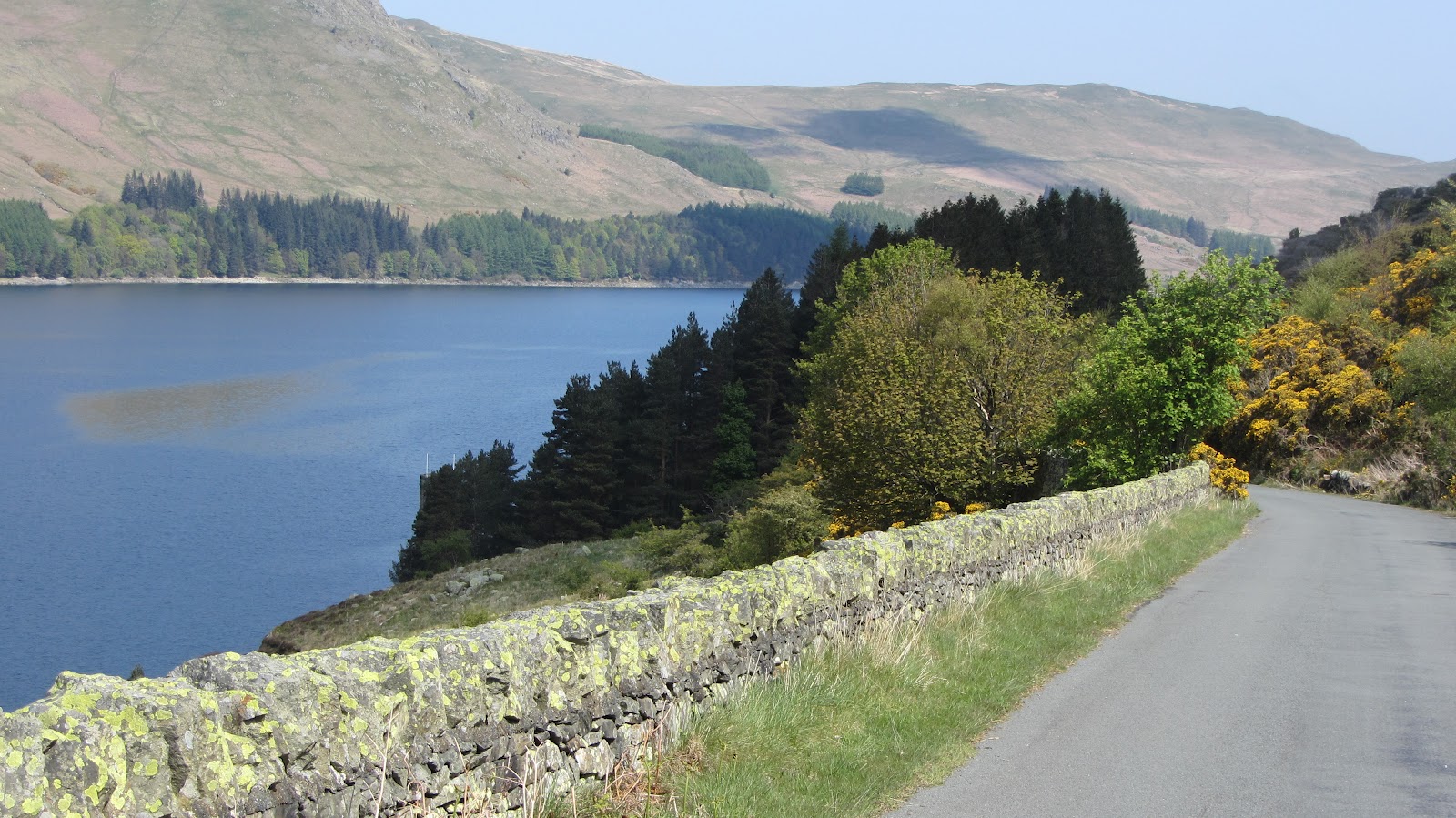
looking across the lake

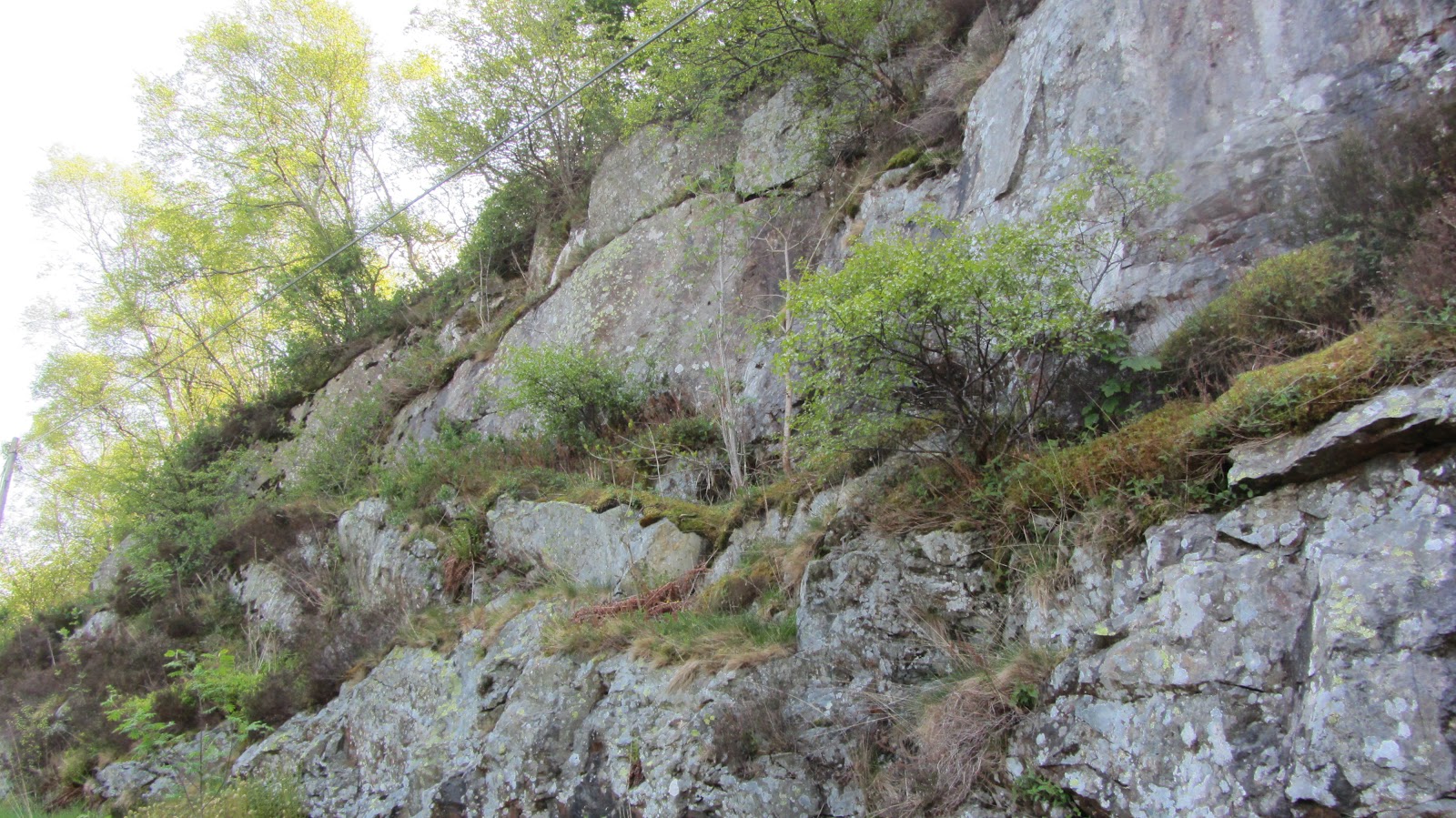
steep cliffs by the roadside

Gorse growing by the roadside

The path leading up the hillside looked very inviting.....

.... and gave me some views from a higher perspective

A lonely tree that used to grow atop a cliff

Strata showing in the rocks

A lonely tree growing on the moorland

A wide expanse of moorland

Two trees near the water's edge

An incised river valley

An Island near the far end of the lake

Waterfall on a stream flowing into the lake

The far end of the lake was sheltered, very still, and gave clear reflections

A hill reflected in the still water

As I left I admired the dam that created the lake in 1940

Monday, May 14, 2012

Light Cyan Disaster

This post is here to remind me never to try and refill a printer cartridge again, certainly not without a proper refilling kit anyway.

After spilling a little I managed to knock over the bottle, which created even more MESS.
After making a lot of mess, I managed to resolve the problem. The ribbon feeding ink from the CISS ink supply   to the cartridges was clipped underneath the cartridges the full length, now it hangs down under the final colour cartridge, and all the cartridges are refilling nicely.


Things could have been a lot worse. It could have been a Cyan Disaster.

As it was, it was only a light cyan disaster.

Tuesday, April 24, 2012

Punt Tour on theCam

A chauffered tour in a punt on the Cam is can be a wonderful way to spend an hour when you are in Cambridge.


You can take out self-hire punts, and it may be fun, but you miss out on all the information and anecdotes that your guide entertains you with on the way. Plus it probably takes more than a couple of hours tuition to become competent.

Our guide on the Friday after Easter was a recent graduate of Sheffield University, who lives locally, and this had been his summer job since he was sixteen. He was certainly very competent at punting, making it look effortless, and he also knew a lot about Cambridge.
We started by Silver Bridge, and the route to Quayside took us past several colleges, under various bridges. There are some great sights, Kings College chapel, Trinity College Library, designed by Sir Christopher Wren, and gardens stretching down to the river.
The Cam used to be navigated with horses pulling barges from a tow-path, like a canal, which worked well until they got to Cambridge, where there was no tow-path on account of the the colleges owning the land right up to the river, and buildings on both sides near the quayside.  The solution was to lay gravel on the river bed, so that it was shallow enough for the horses to walk on the river bed pulling the barges.
That is how it is that punts are propelled by pushing the pole against the gravel on the river bed. There is always the danger that the pole gets stuck in the gravel. The secret is to let go of the pole, and stay on the boat. I am sure you feel sheepish, but at least you stay dry.  We had the good fortune to see someone do exactly that, and our guide very expertly retrieved the pole for them.


Punts are flat bottomed and very stable, they have blankets in case it gets cold, and umbrellas in case it rains. Thankfully we did not need them. The full ticket price as £16.50 each, but somebody from Scudamores gave us a voucher so it cost the two of us just £26.00.
fter the tour, we went to the nearby Fitzwilliam Museum looking at ancient Assyrian and Egyptian artefacts, and French Impressionists but missed the Chinese Jade that, quite coincidentally was stolen later that night.

Monday, April 23, 2012

Celebrating Easter in Carnforth

No we were not in Carnforth at Easter, but we were there in time to see the Easter decorations in Market Street


Tuesday, April 17, 2012

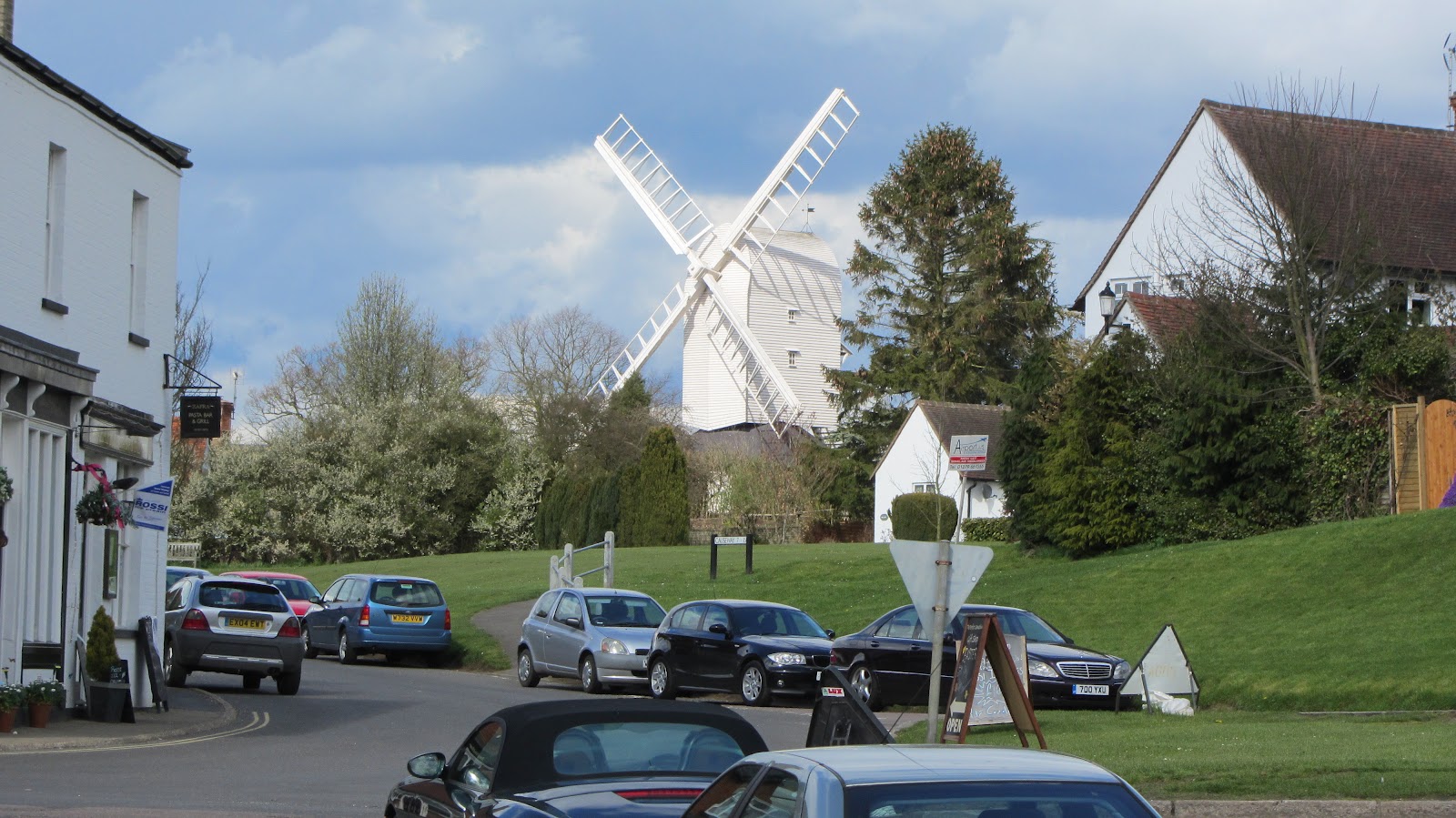
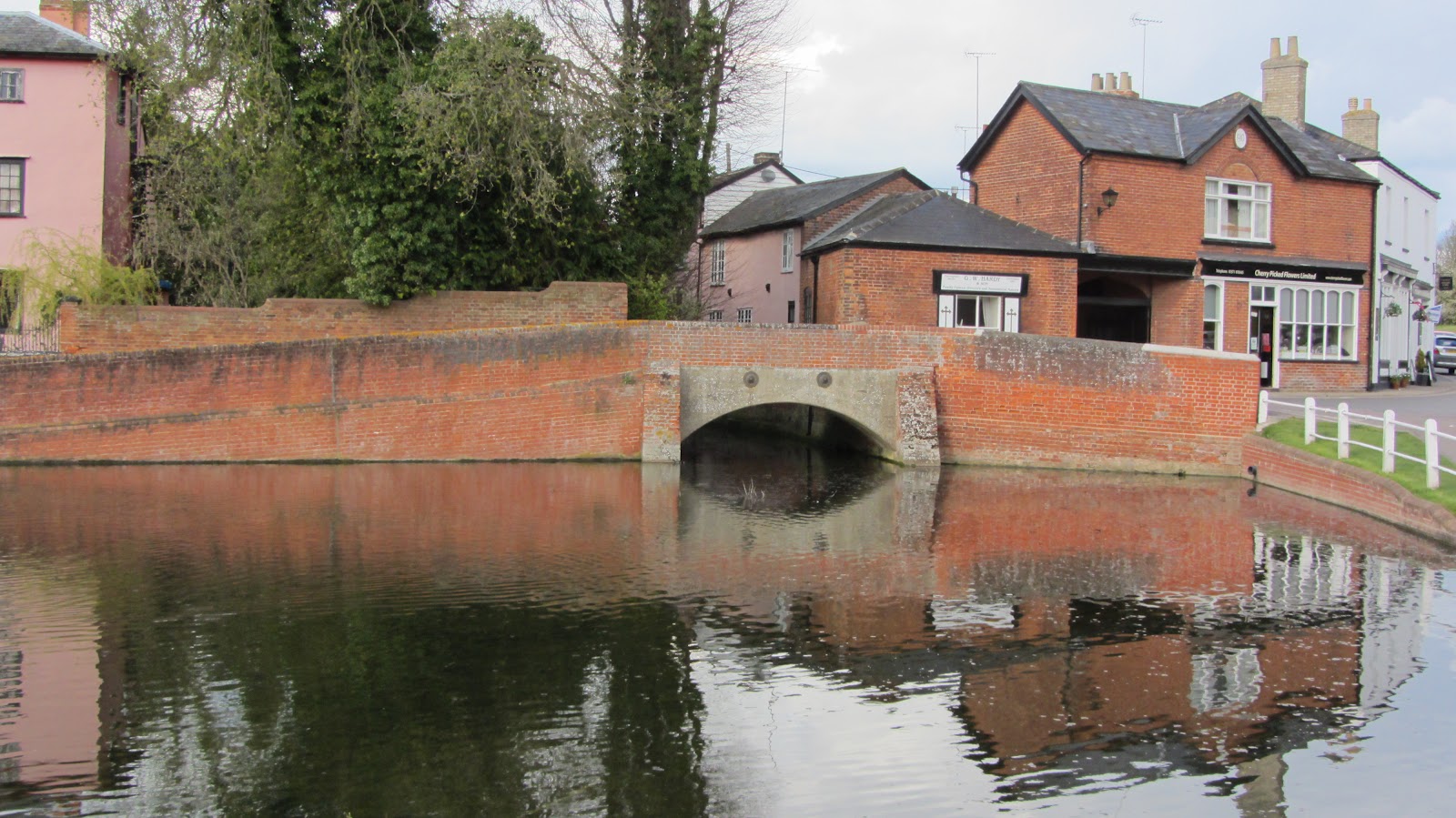
Finchingfield

Travelling between Braintree, where we had visited the Warner Textile Archive and Saffron Walden, on our way to Cambridge, we could not help but stop at the picturesque village of Finchingfield.


Wednesday, April 04, 2012

Dovedale

If you sometimes think, on your way from Ullswater to Kirkstone, that some of the valleys on either side would make a good walk, then you would be right.
The last valley on the right, lying between Middle Dodd, and High Hartsop Dodd, is Caiston Glen which has a path running alongside Caiston Beck leading to Scandale Pass. This was my return route.
My outward route one Sunday last month was up the next valley of Dovedale, starting from Brotherwaters Inn, or Sykeside camping site, where the convenient parking costs just £2.50 for the day.
After some mixed weather the previous two days, last Sunday was a beautiful bright clear day, with excellent visibility and a great day for walking.
The path goes through the camp site across the beck to some farm buildings, then turns left past another farm, where there was a herd of black cows. They did not seem particularly perturbed as I walked through the herd.
The walk was gentle at first, with Hartsop above How on the right, and High Hartsop Dodd across the other side of the valley to the left, with the stream some distance off in the valley.

After a while the path comes nearer the stream, and then crosses it over a footbridge. By this point the valley has widened, the stream turns off to the right, there is a hill in the middle of the valley, and on the left there are a series of streams, flowing into Hogger Gill, that cut into the hillside as it sweeps round the corner of the valley.

The path starts to rise here, and there are some waterfalls, including one high one, which was quite spectacular.
Then there is a second footbridge, and we joined the path on the right hand side of the stream.
I had seen three men in white shirts on this path, which had missed out the cows and the waterfall. They were young geordie lads, who were just drying off and warming up after a dip in one of the pools in the stream. Very hardy young lads. While I was chatting with them, we were passed by a couple I had met at the waterfall. Six of us had the whole valley to ourselves.
looking back down the valley, towards Caudale
The path continues climbing a little higher up the hillside from the stream, which curves round behind the hill. It feels quite concealed and closed in at this section. It is a river valley with steeply sloping sides rising either side of the stream.
The valley curves round behind the hill.
The path then takes a turn to the right, and becomes very steep indeed. It is almost a staircase, with stones set into the hillside making a clear path up the steep slope, which climbs to the right of the rather fearsome looking Dove Crag. The view gets better and better, across to High Street, and past Place fell across to the Pennines.
Part of the valley concealed behind the hill
Then it becomes less steep again, less rocks and more grass. I left the path here, and tried to find the cave, called Priest's Hole, but I did not find it. Then I ended up missing the path, so I scrambled up the last bit of slope to the ridge, and enjoyed a picnic looking down over Rydal Glen, and out past Windermere to Morecambe Bay.
I had my picnic looking down over Rydale, and out towards Morecambe Bay
I walked up to Hart Crag, where the all round view was spectacular, across to Helvellyn, and over Kentdale  to the Howgills. I looked down on Hartsop above How, that was towering above me in the valley not long before.
Looking out past Penrith to the pennines
The route back was down from Hart Crag, up to Dove Crag, which was quite busy, and then by a path that runs alongside a fence that keeps a respectful distance from the top of the steep slopes with the streams that flow into Hogger Gill, which I had admired earlier in the day.
Scandale Tarn in the foreground, and Windermere in the distance
I could see the three geordie lads ahead of me, and thought I might catch them up, but they went back across the top, onto High Hartsop Dodd, while I went at the bottom of the valley, walking alongside Caiston Beck.
A pond on the plateau
Caiston Glen is a river valley, with steep grassy sloping sides, strewn with rocks, and some shrubs growing toward the top on the south facing slope. The beck has carved a deep gulley at points, and there are some waterfalls. The valley runs fairly straight, and then turning slightly as it reaches Kirkstone Glen.
Waterfalls in Caiston Glen
Waterfall on Claiston Beck
From this point there was a breeze, stronger than there had been on the ridge, and coming from the North.
I met someone who has spent the afternoon climbing boulders alongside the path, who remarked that the breeze was quite cool. Then I met another man who had just recently taken up walking, who chatted with me as we made our way to the carpark, walking at some pace, so that I could get back to meet Ann at the agreed time, which I just managed to do.
What a great day's walk.
Caiston Glen has carved a deep gulley at points
Arnside on the previous evening

Thursday, March 29, 2012

Swallows & Amazons

It exceeded our expectations. We went not knowing what to expect, as it was the only show on the evening of my birthday, but we were well entertained by Song, Dance, and Drama.
It told the story of 4 children from one family who go off to sail in a boat, the Swallow, on the lake, and camp on the island, where they met two girls sailing their boat, the Amazon. They make friends, engage in mock battles, and have adventures.
The actors do a great job of playing children; John, twelve years old, in short trousers, captain of the ship, carrying the responsibility; Susan first mate, oldest girl, keeping the family together, and a very expressive dancer; Titty (short for Letitia, I thought it must be Kitty and I was mishearing it) had some great scenes, Ann thought she was the best; and Roger, played by the largest actor, was the youngest. He had some great lines, and made a great eight year old. The two Amazon girls were wonderfully fierce, until they started squabbling with each other.
The props were simple but very effective. Cormorants on long sticks, blue ribbon to represent the water, wood shaped like a boats bow, were all manhandled to give a very vivid impression of the scenes being conjured up. The scene where they were sailing and changing tack was very impressive, as was the night time storm with lightning and wind machine.
The props were maneuvered by other members of the cast, as well as the six children there were seven other actors who, when they were not playing four minor adult characters, would be on stage in gray coats and hats, moving the props, or fulfilling their other function, as musicians. There was a violin, two cellos, a piano, and a variety of other instruments.
My worst fear of musicals, being bored during the musical numbers, proved groundless. Far from interrupting the drama, the music added to it and carried the plot along. It was very engaging.
It got even more engaging towards the end, as we in the stalls (so glad we did not manage to get the seats in the circle) got thrown bean bags to help throw at the villainous pirate, and during the final number a five foot model of each of the boats was passed over the heads of the audience.
There were a fair number of older folk who seemed to be enjoying it, and considerable number of teenagers including one large school group, in the seats near us. We were impressed how they quietened down as soon as the lights darkened. Young and older, we all enjoyed it, and it was a boisterous, excited crowd pouring out into Williamsons Square with the final number ringing in our ears, having enjoyed a wonderful evenings entertainment.

Wednesday, March 14, 2012

I, Claudius

This is the story of an intelligent, quick-witted, resourceful man surviving in a brutal and capricious age. Regarded as an idiot by many on account of his stammer and his limp, he was despised by many and the butt of  cruel jokes. But partly because of this he survived to become ruler of the Roman world, at a time when many in his imperial family met untimely deaths, with foul play strongly suspected.
The action takes place during the reigns of Augustus, Tiberius and Caligula. Augustus ruled very ably, but as far Claudius was concerned his wife (and Claudius grandmother) was the evil power behind the throne. Tiberius ruled fairly ably, except in Rome, where he did not have the qualities to be an inspiring leader. Claudius' brother Germanicus would have made a better Emperor,  and Tiberius knew it, making him more insecure and malicious. Caligula was completely of the page.  As Claudius said, all the members of his family were either very good, or very bad. There are not many shades of gray.
It is written in the first person, as if Claudius' autobiography had been lost for 1,900 years and suddenly discovered in the 1930s. Most of the major events are a matter of public record, and if the gaps are filled in with speculation, Robert Graves was given a head start from all the speculation that was around in Roman times.  There is an amusing incident where the young Claudius engaged in a conversation in a library between two eminent historians, one writes attested truth, the other writes readable speculation.  We get all the speculation, with unlikely explanations of how Claudius got to know real truth.
It is an enjoyable read. There were several amusing incidents or well written paragraphs you want to share, but there was a problem. After a while I stopped being as offended by Caligula's outrages, and caught some of the black humour of it. It is fun to read in its context but difficult to share.
At the end of the day you forget the injustice and outrage, and remember the inspiring stories. Many people despised Claudius and treated him shamefully, but he had a few, very few, friends and family who appreciated him and were very loyal. An old professor, a soldier, the daughter of a prostitute, a servant, a cousin, a brother (and great general); these are the noble characters.
The final page opens a new chapter, with Claudius as Emperor. Whether Graves does as good a job of persuading us of Claudius' virtues in that book remains to be seen, but I Claudius was certainly a good read.